
Remembering a pioneer – Johanna Dohnal in Augmented Reality, or: Keeping quiet for tactical reasons has always proven to be a mistake
A feminist Augmented Reality intervention in public space – marking the 25th anniversary of Tricky Women Tricky Realities
Talk & Event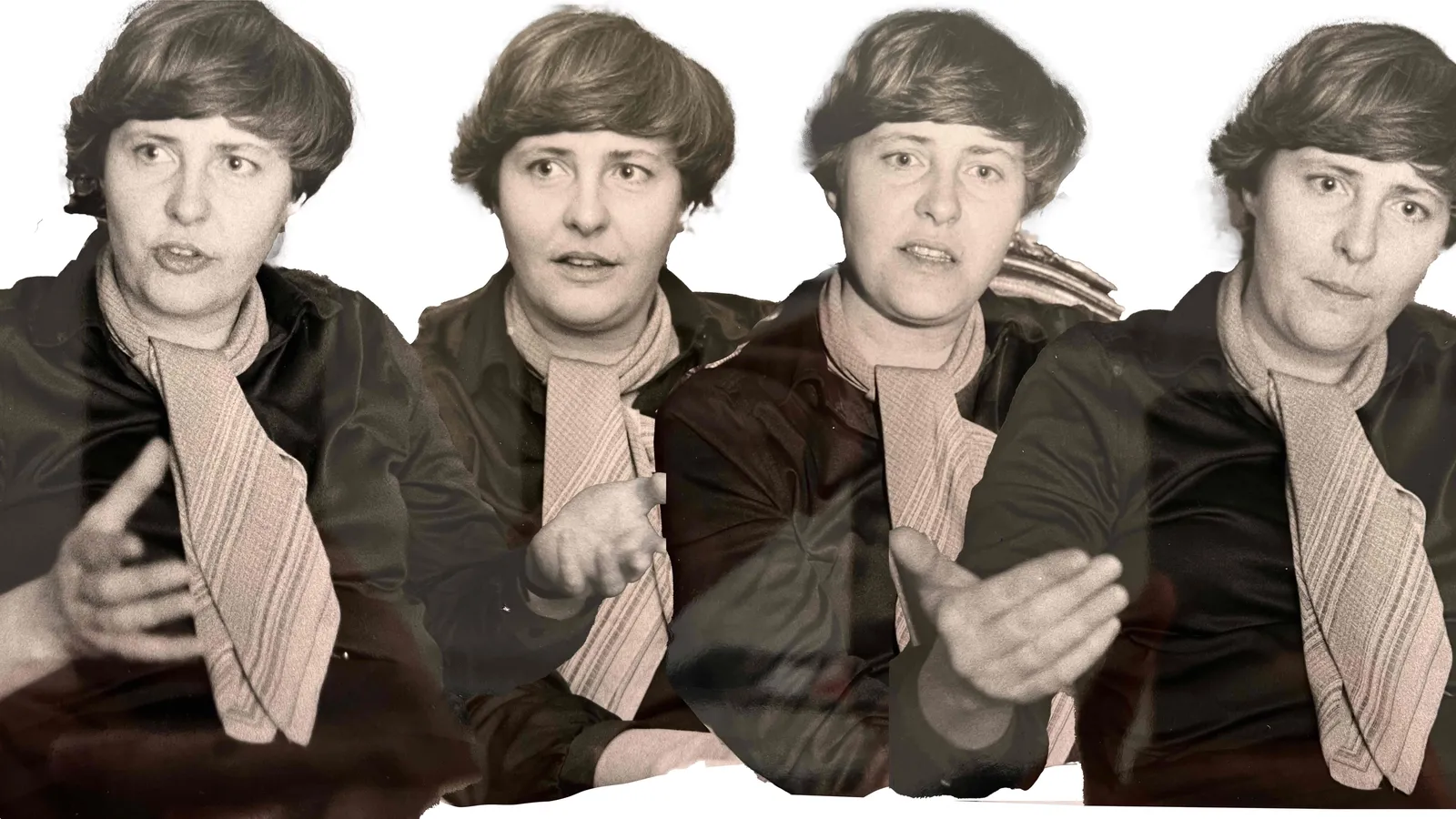
Collage by Susi Jirkuff
Source: Walter Swistelnicki, Johanna Dohnal Archiv
Augmented reality installations form a digital monument honoring Johanna Dohnal (1939–2010) – Austria's first Minister for Women's Affairs and a symbol of the struggle for equality – and serve as a publicly visible sign of feminist remembrance culture.
Johanna Dohnal’s political achievements have profoundly changed Austrian society, from the reform of family law to the protection of women against violence. Their impact is still felt today, and in times of growing anti-feminist, anti-queer and anti-democratic sentiment they are more important than ever.
The installation at Johanna-Dohnal-Platz invites visitors to learn more about Johanna Dohnal’s achievements and her historical significance through art. The artistically diverse, animated contributions bring the location to life virtually, transforming it into a place of democratic action and reflection on social and political conditions.
Eni Brandner, Kris Hofmann, Susi Jirkuff, Nayeun Park, Veronika Schubert and Anna Vasof have created six virtual sculptures that relate to Johanna Dohnal and relevant socio-political debates in both a historical and a current context. Combining animation, video, drawing, sound and voice, their works feature texts, quotes, archive material and original recordings. With backgrounds in animation and fine arts, the participating artists all have their own distinct style and innovative approach.
The individual works are called Sprechstunde (Consultation Hours), Johanna Dohnal – The Programmer, Feminism/Role Models/Self-Definition, Substantial Quantum Leaps, A Protesting Vase II, and Portraits of Progress.
The works can also be experienced online at artificialmuseum.com
Augmented reality (AR) uses a modern digital technology to connect digital content – such as moving images, photos, virtual sculptures, texts, or sounds – with the physical world. All you need is a mobile device – no app, no special glasses, you just scan a QR code.
In collaboration with Artificial Museum, Johanna Dohnal Archiv, AHS Rahlgasse and Top Kino.
Made possible by KÖR Vienna and supported by ZukunftsFonds of the Republic of Austria
THE AR INSTALLATIONS
Substantial Quantum Leaps
by Eni Brandner
© Eni Brandner
© Eni Brandner
Johanna Dohnal is considered a pioneer of women’s politics in Austria. She spoke openly about many issues that had previously been silently accepted. She made injustices visible and did not mince her words when criticizing patriarchal social structures and challenging entrenched systems.
With these thoughts in mind, I created an AR object that attempts to make this process of breaking through tangible. An invisible barrier becomes visible, and only by actively stepping into its interior does it begin to break apart.
The work thus translates a social experience into a spatial and physical perception. It reminds us that the “glass ceiling” is not merely a metaphor, but a real—though often invisible—boundary, and that breaking through it requires movement, presence, and action.
Source reference: Origin archive audio recording: “Austrian Mediathek / Technisches Museum Wien”
http://www.enimation.at/enimation/biography.html
Portraits of Progress
by Kris Hofmann
© Kris Hofmann
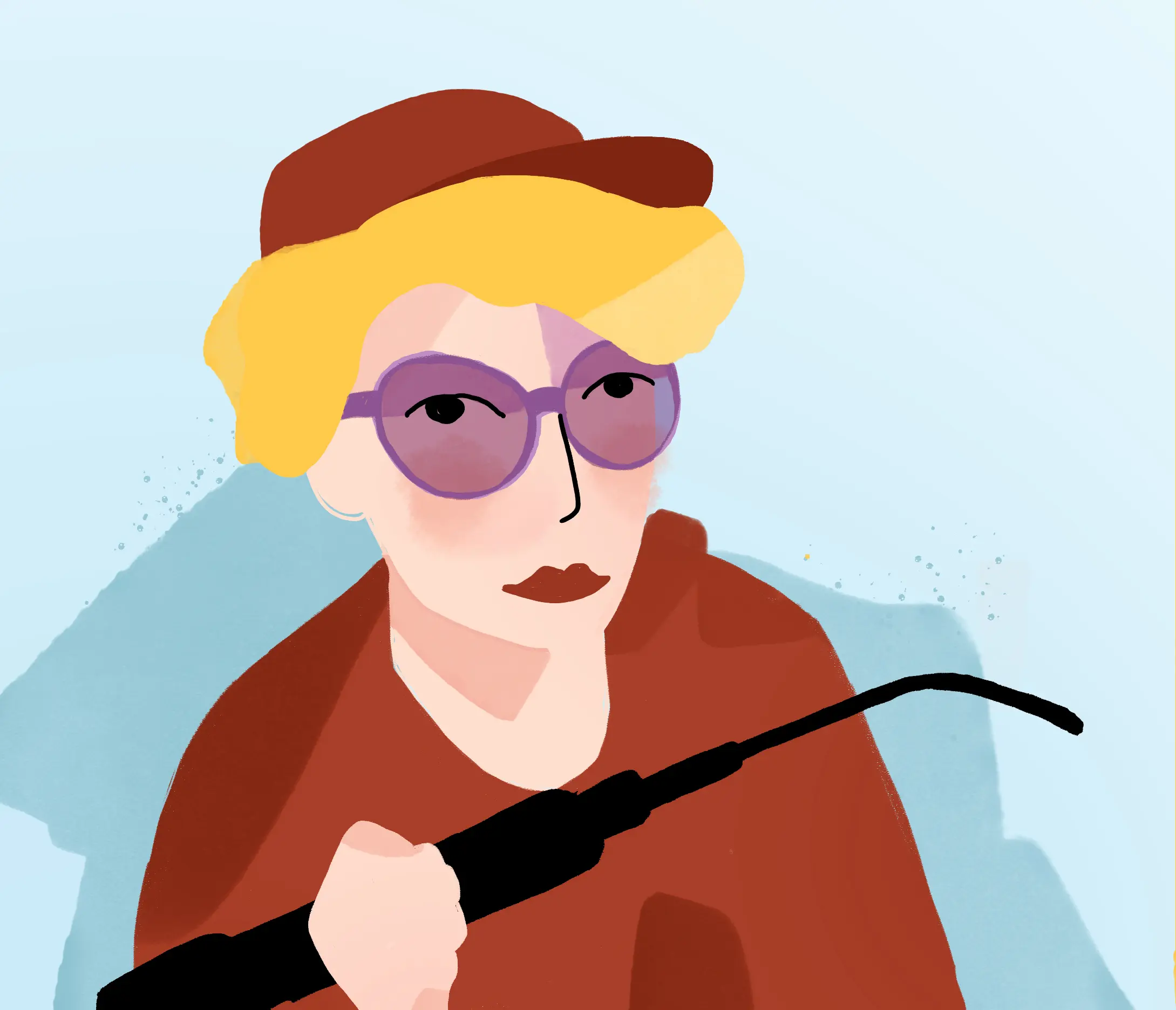
The centerpiece of the installation consists of portraits of women whose lives—directly or indirectly—have been touched by Johanna Dohnal’s work. The portraits depict different women, including academics, workers, and musicians. The picture frames are arranged on a fantastical, physically impossible structure that rotates 90 degrees every five to eight seconds, creating a subtly surreal movement.
Sprechstunde
by Susi Jirkuff
© Susi Jirkuff
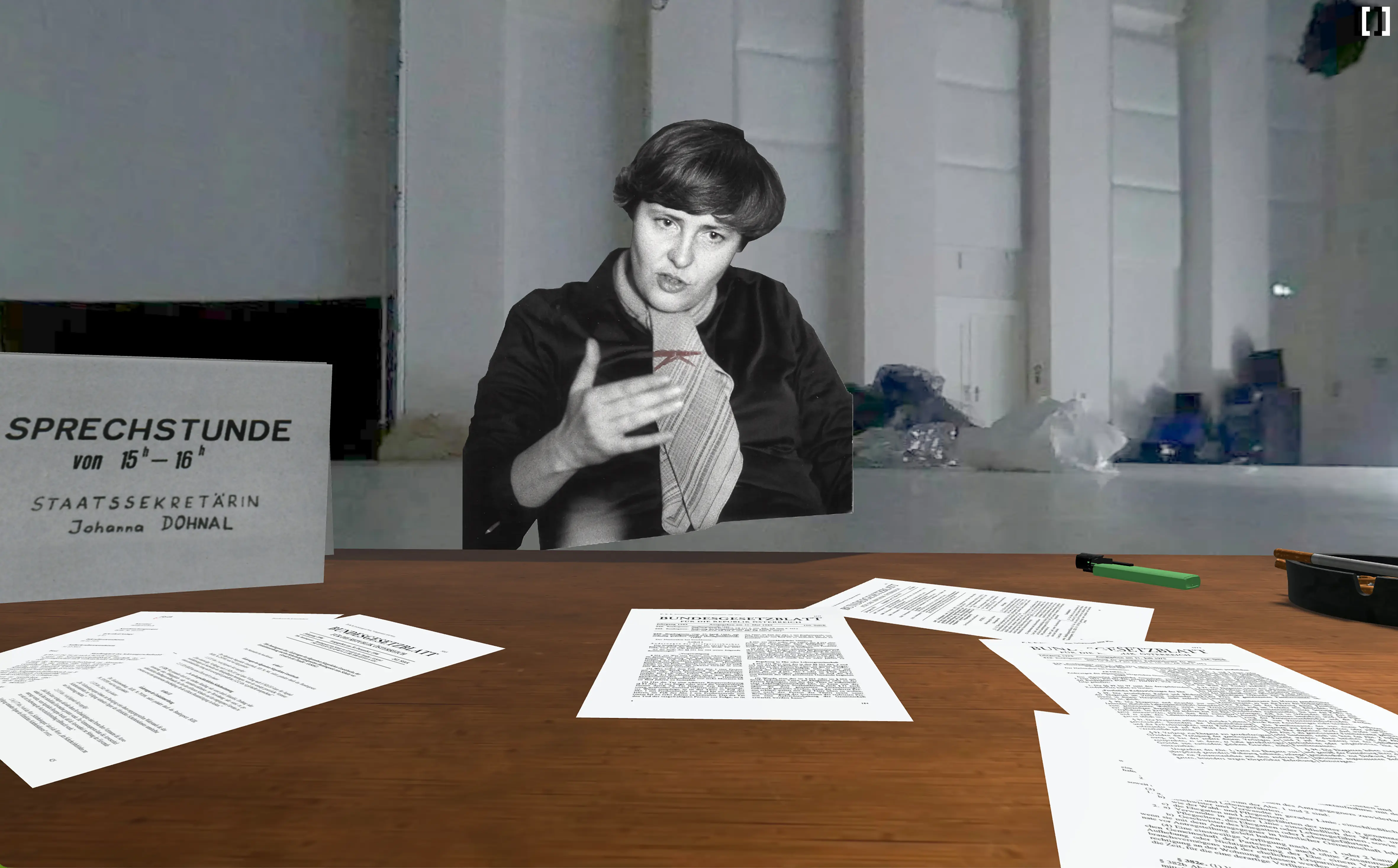
In the AR installation, a 3D office desk appears with a sign reading “Consultation Hours” — known from a press photograph of Johanna Dohnal. Behind it sits Johanna Dohnal as an animated figure. An animation of her head and upper body was created from a series of archival photographs in which she can be seen gesturing while speaking.
The entire scene forms a 3D table object that the audience can walk around. The sign is visible from the front, side, and back, while the animation of Johanna Dohnal appears at the front or can be seen as a silhouette from behind.
A Protesting Vase II
by Nayeun Park
© Nayeun Park
© Nayeun Park
The installation consists of a video and a 3D sculpture. The sculpture functions like a “projection surface” for the video, in which garments associated with “femininity” are destroyed, sewn back together, and ultimately transformed into a sculpture.
A spoken text accompanies the images and reflects on violence against women, gender roles, and patriarchal structures, drawing on the ideas and positions of Johanna Dohnal.
GRUNDSÄTZE
by Veronika Schubert
© Veronika Schubert
© Veronika Schubert
© Veronika Schubert
I found the following quote in the Austrian newspaper Falter, which for me expresses the idea perfectly:
“I think it is time to remember: the vision of feminism is not a ‘female future.’ It is a human future. Without role constraints, without power and violence structures, without male alliances and the obsession with femininity.” — Johanna Dohnal
I enjoy working with newspaper material. For me, it is a form of quoting, but also a personal way of commenting. The media—or more precisely WHAT and especially HOW something is communicated publicly—strongly shapes public perception and the general mood within society. AND: it also has a lasting influence on our own worldview, whether we want it to or not.
For this AR installation, I use sentences that Johanna Dohnal could have said. At the same time, they are meant to be sentences with which viewers can identify, or at least that encourage reflection. All sentences begin with “I” and relate to role models, self-perception, external perception, expectations, desires, attributions, and self-definition.
Johanna Dohnal – The ProgramMer
by Anna Vasof
© Anna Vasof
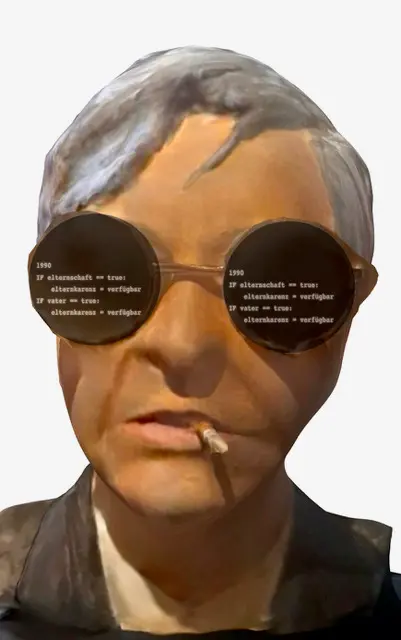
In the Virtual Monument of Johanna Dohnal, an animated text appears in her glasses. It is written in a programming-like language and describes the laws she fought for and succeeded in implementing. The typing animation emphasizes that Johanna Dohnal herself was a kind of “programmer” of social rules.
The virtual head is based on a real plaster head that I sculpted and painted myself. This physical head was then scanned and integrated into the AR installation.
AR Intervention Johanna-Dohnal-PlatzTalk & Event
AR Intervention
Made possible by

Supported by